
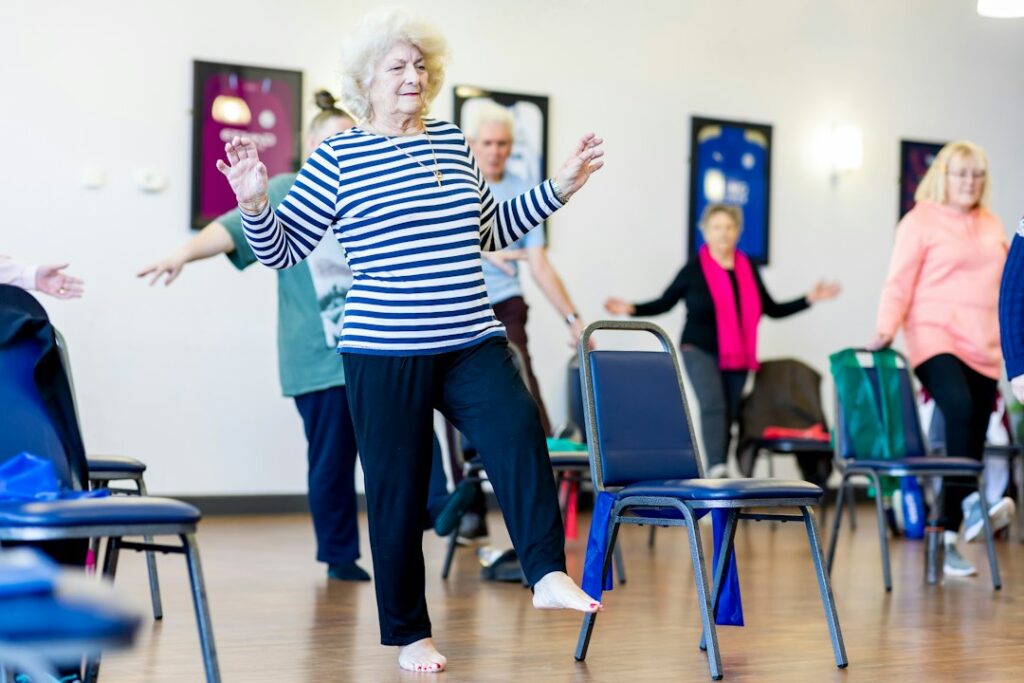
Assisted living can support an active lifestyle by making movement, social connection, and everyday participation easier to maintain. The goal is not exercise for its own sake. It is helping residents continue doing meaningful activities safely, at a comfortable pace, with support available when needed.
For older adults and families in State College, PA, active living may include walking indoors, joining a group activity, tending plants, attending an educational program, or simply having regular reasons to leave an apartment and interact with others.
What does an active lifestyle mean in assisted living?
An active lifestyle includes more than formal workouts. It combines physical movement, mental engagement, social participation, and daily routines that encourage independence.
A resident may be active by:
- Walking to meals instead of eating in a private room
- Participating in stretching, balance, or strength activities
- Joining a card game, discussion group, or music program
- Helping with a garden, craft, or cooking project
- Attending community events or seasonal gatherings
- Completing simple daily tasks with the least assistance necessary
This broader definition matters because residents have different abilities, health conditions, interests, and energy levels. Someone who uses a walker may be highly active within a safe routine, while another resident may participate from a seated position.
How does assisted living encourage movement during the day?
Assisted living communities often support movement by building activity into ordinary routines. Residents may walk between their living space, dining area, activity rooms, outdoor spaces, and common areas. These short trips can add up without feeling like a formal exercise session.
Accessible hallways, elevators, handrails, well-lit rooms, seating areas, and uncluttered pathways can make movement more comfortable. Rest areas are also useful because they allow residents to pause without feeling rushed.
Staff support can help residents choose the right level of assistance. For example, a person may need help standing up but be able to walk independently once upright. Another resident may need supervision outdoors but not indoors. Appropriate support can preserve participation while reducing avoidable risk.
The purpose is not to make every resident walk farther or move faster. It is to help each person remain as involved as possible within personal abilities.
What kinds of exercise are common?
Activities vary, but many assisted living programs include gentle exercises that focus on strength, flexibility, endurance, and balance.
Common examples include:
- Seated stretching for the shoulders, arms, back, and legs
- Light resistance exercises using bands or small weights
- Balance practice near a stable support
- Walking groups or indoor walking routes
- Chair yoga or guided breathing exercises
- Dance, movement-to-music, or recreational games
- Simple coordination activities, such as tossing or reaching exercises
Regular movement may help support mobility, confidence, mood, and the ability to manage daily tasks. However, exercise should be adapted to a resident’s medical history, pain level, balance, fatigue, and mobility equipment.
A resident who experiences chest discomfort, unusual shortness of breath, dizziness, sudden weakness, or new pain should stop the activity and seek appropriate medical guidance. Exercise programs should never pressure residents to ignore symptoms.
How are activities adapted for different abilities?
A well-designed activity program offers more than one way to participate. The same group may include standing, seated, and modified versions of an activity.
For example, a movement class might include:
- Standing exercises for residents who are steady on their feet
- Chair-based movements for residents who tire easily
- Smaller ranges of motion for people with stiffness or limited flexibility
- Extra time for residents who process instructions more slowly
- Visual demonstrations for people who have difficulty hearing
- Quiet alternatives for residents who become overwhelmed in large groups
Adaptation also applies to memory changes. Familiar music, repeated routines, clear instructions, and simple choices can make participation easier for residents living with cognitive impairment.
The most useful programs focus on participation rather than performance. Finishing every repetition or keeping up with a group is less important than feeling safe, included, and respected.
Why does social connection support an active lifestyle?
People are often more likely to participate when an activity has a social purpose. A shared meal, gardening project, game, or discussion group can provide motivation that exercise alone may not create.
Social activities may also reduce the isolation that can occur after a move, health change, loss of a spouse, or reduced ability to drive. Regular contact gives residents reasons to get dressed, leave their rooms, and maintain routines.

Not every resident enjoys large gatherings. Smaller groups, one-to-one visits, quiet hobbies, and interest-based activities can provide meaningful engagement for people who prefer less stimulation.
An active lifestyle should include social choice. Participation should be encouraged, not forced.
How do outdoor spaces and seasons affect activity in State College?
Seasonal conditions can influence how safely and comfortably residents stay active. In colder months, snow, ice, reduced daylight, and heavy clothing may make outdoor walking more difficult. Indoor walking routes, hallway activities, seated exercise, and indoor gardening can help residents remain mobile during those periods.
During warmer weather, shaded seating, hydration, light clothing, and activities scheduled outside the hottest part of the day can make outdoor time more comfortable. Sudden temperature changes may affect residents with heart or lung conditions, so pacing and access to indoor spaces are important.
Outdoor areas do not need to be elaborate to support activity. A level path, benches, raised planting containers, good lighting, and clear walking surfaces can encourage residents to spend time outside while maintaining reasonable safety.
Can assisted living help residents remain independent?
Assisted living can support independence by providing help with tasks that have become difficult while allowing residents to continue doing what they can safely manage.
For instance, a resident may need assistance with bathing but still choose clothing, attend activities, walk to meals, or help organize personal belongings. Maintaining these choices helps preserve confidence and daily purpose.
Too much assistance can unintentionally reduce movement. If someone is capable of walking a short distance safely, automatically transporting that person everywhere may limit opportunities to remain active. At the same time, expecting a resident to manage alone when support is needed can create fall risks.
A balanced approach asks: What can the resident do independently? What requires supervision? What assistance preserves participation rather than replacing it?
What should families ask about activity programs?
Families can learn a great deal by asking specific questions rather than relying on a general activity calendar.
Useful questions include:
- Are activities offered every day?
- Are programs available for different mobility levels?
- Can residents participate in seated or quieter versions?
- How are activities adjusted for memory loss or hearing difficulty?
- Are indoor walking areas available during winter weather?
- How are outdoor spaces maintained?
- Can residents suggest or lead activities?
- How are new limitations, fatigue, or changing interests handled?
It is also helpful to ask the resident what “being active” means personally. One person may want regular walks, while another may value music, conversation, woodworking, faith-based gatherings, or time outdoors.
The strongest approach connects activity with identity. Residents are more likely to participate when programs reflect their interests, past routines, and current goals.
What if a resident does not want to join group activities?
A resident does not have to enjoy group exercise to benefit from an active routine. Individual activities may include walking with a companion, folding laundry, arranging flowers, listening to music while moving, completing a puzzle, or helping with a small household task.
Reluctance may also signal pain, depression, fatigue, fear of falling, hearing difficulty, or discomfort in unfamiliar settings. A change in participation deserves curiosity rather than criticism.
Small adjustments can help: attending at a quieter time, bringing a familiar person, choosing a shorter activity, or starting with an observation rather than full participation. Active living works best when it is personal, flexible, and connected to daily enjoyment.
